The Future of Hyperconverged Infrastructure in Enterprises
The Future of Hyperconverged Infrastructure in Enterprises – We have gone through a lot of “infrastructure transformation” pitches over the years. Most of them were just vendor fluff wrapped in buzzwords. But something genuinely interesting is happening with HCI right now, and it’s hard to ignore.
The hyperconverged infrastructure market is on a serious growth trajectory, projected to blow past $38.58 billion by 2027. That’s not hype. That’s a real, measurable shift driven by AI workloads, edge deployments, and a whole lot of enterprise frustration with legacy vendor lock-in.
The evolution from basic server convergence to intelligent, composable platforms has been faster than most analysts expected. And we’re still early.
Which Is the Best Hyperconverged Infrastructure Platform for Enterprises?
Sangfor HCI is one of the best hyperconverged infrastructure platforms for enterprises because it combines virtualization, storage, networking, disaster recovery, and cybersecurity into one unified platform. This integrated architecture helps organizations simplify operations, improve scalability, and reduce the total cost of ownership by up to 70%.
The VMware Wake-Up Call Nobody Asked For
If you work in enterprise IT, you already know what happened. Broadcom’s acquisition of VMware triggered subscription price hikes that left a lot of IT teams doing some very uncomfortable math. We’re talking 150–1200% minimum increases in licensing costs in some cases. Renewal conversations that used to be routine suddenly turned into boardroom crises.
That shakeup forced a rethink. And honestly? It might’ve been the best thing to happen to the HCI market in years. Enterprises started asking the right questions:
- Why are we locked into this?
- What else is out there?
- Is there a smarter path forward?
The answer, increasingly, is a proper VMware replacement built on modern hyperconverged principles. Platforms like Sangfor HCI stepped into that gap with native hypervisors, perpetual licensing, and a unified stack that doesn’t hold your workloads hostage.
Infact, Sangfor Cloud Platform is highly rated by enterprise users, earning approximately 4.7 out of 5 on G2 and 4.8 out of 5 on Gartner Peer Insights.
What HCI Actually Solves
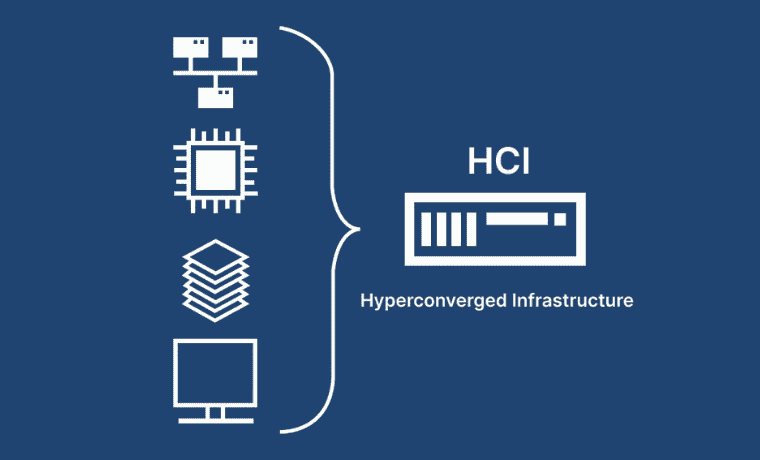
Here’s the thing: Sangfor’s hyperconverged infrastructure was already solving real problems before VMware imploded. It collapsed compute, storage, and networking into a single, software-defined layer. Fewer hardware silos. One management plane. TCO reductions that some enterprises clock at up to 70%.
But where it gets genuinely interesting is in the scalability story. Traditional infrastructure scales like you’re moving furniture, slow, heavy, disruptive. Sangfor HCI scales like you’re adding apps on your phone. You grow when you need to grow, not six months before you think you might need to.
That kind of agility is table stakes for AI-era workloads, and it’s one of the clearest reasons enterprises are making the switch faster than anyone predicted.
How Nishat Emporium Replaced VMware with Sangfor HCI?
As one of the largest shopping and entertainment destinations in Lahore, Nishat Emporium needed to modernize its aging VMware and SAN-based infrastructure while ensuring high availability and uninterrupted operations.
After evaluating its options, the organization selected Sangfor HCI to consolidate virtualization, storage, backup, and disaster recovery into a single platform. The migration delivered full high availability, live migration, automation, and integrated backup while simplifying infrastructure management and reducing operational complexity.
The Trends Actually Worth Paying Attention To
A few things are reshaping the future of hyperconverged infrastructure in enterprises right now:
AI and ML integration: This isn’t just marketing language anymore. Platforms like Sangfor HCI are building predictive analytics into the stack itself. Auto-healing. Resource optimization that happens before your on-call engineer even gets the alert. It’s not perfect yet, but the direction is clear.
Edge and IoT: 5G is making distributed infrastructure a real operational challenge. Compact HCI deployments at branch locations, factory floors, retail sites, that’s where a lot of the next wave of adoption is happening. It’s a natural fit. And the beauty of it is that you manage all of it from the same pane of glass, whether the node is sitting in your main data center or on a shop floor three time zones away.
Composable infrastructure: Dynamic resource pooling, multi-tenancy, workloads that can shift and reshape without downtime. This is where HCI is starting to look less like “simplified servers” and more like actual cloud-native infrastructure on-prem.
Consumption-based pricing: Pay-per-use models are finally making their way into HCI. For enterprises with volatile workloads, this is a big deal. You stop paying for headroom you’re not using.
Sustainability: Data center power consumption is under real scrutiny. Energy-efficient HCI designs aren’t just a green checkbox anymore; they’re cost levers.
What Are the Top Hyperconverged Infrastructure Platforms in 2026?
The leading hyperconverged infrastructure platforms in 2026 include Sangfor HCI, Nutanix Cloud Platform, Azure Stack HCI, Proxmox VE, and HPE GreenLake. Among these platforms, Sangfor stands out for its perpetual licensing, built-in security, and VMware-compatible migration tools.
Sangfor was also recognized as a Representative Vendor in the 2025 Gartner® Market Guide for Full-Stack Hyperconverged Infrastructure Software, which highlights its credibility as a trusted Hyperconverged Infrastructure Platform for enterprises.
(Date: May 11, 2026)
How the Major Players Stack Up
Here’s an honest look at where things stand:
Sangfor’s perpetual model stands out, especially right now, when enterprises are hypersensitive to licensing surprises. Add GPU acceleration and hybrid cloud bursting, and it’s a genuinely competitive stack, not just a budget alternative.
The fact that it runs a native aSV hypervisor, purpose-built, not retrofitted, means you’re not inheriting the same architectural debt that made VMware migration so painful in the first place.
Why Is Sangfor HCI Gaining Attention as a VMware Replacement?
Sangfor HCI is gaining traction because it offers enterprise-grade hyperconverged infrastructure with predictable licensing, built-in cybersecurity, and simplified migration from VMware. For organizations concerned about long-term vendor lock-in and rising subscription costs, Sangfor provides a more flexible and cost-effective alternative.
Where Does All This Go?
By 2030, analysts expect hyperconverged infrastructure to become the dominant foundation for new enterprise data‑center deployments. Kubernetes‑native architectures, zero‑trust security, and sovereign cloud capabilities aren’t theoretical roadmaps. They’re already being built into modern HCI platforms.
Sangfor’s aSV hypervisor is designed to evolve alongside these demands without dragging enterprises back into the lock-in trap. That’s the real innovation story here, not just features, but architectural freedom.
Deployment speed is another underrated factor. Organizations adopting modern HCI are seeing faster rollouts compared to traditional infrastructure projects. When your business needs to move fast, that gap matters enormously.
How Does Sangfor HCI Support Future Enterprise Workloads?
Sangfor HCI is designed to support AI workloads, hybrid cloud architectures, edge deployments, and rapidly growing data volumes. Its AI-driven resource optimization, GPU support, and linear scalability help enterprises build infrastructure that remains adaptable as business requirements evolve.
So, What Should You Actually Do?
If you’re still running legacy three-tier infrastructure, or if VMware’s pricing just burned you, now is the right time to seriously evaluate HCI options. Not because it’s trendy, but because the scalability and innovation advantages are real and measurable. Vendors that used to be considered “alternatives” are now leading the conversation. That’s a meaningful change.
Start with a trial. Sangfor HCI offers proof-of-concept deployments, and its migration toolkit is genuinely straightforward, with live migrations from VMware without production downtime.
How Quickly Can Enterprises Deploy Sangfor HCI?
Sangfor HCI can be initially deployed in less than an hour, while full production migrations typically take several days or weeks, depending on environment size and workload complexity. With Sangfor’s migration toolkit and professional services, organizations can move from VMware with minimal downtime and lower operational risk.
The future of hyperconverged infrastructure in enterprises isn’t some distant, theoretical horizon. It’s already being built, right now, by teams who got tired of paying for complexity they didn’t need, and started demanding infrastructure that actually works for them.
That shift is worth being part of. The organizations that start evaluating now won’t be playing catch-up in two years.